Director’s Note
Announcing the Shenandoah Valley Source Water Initiative
Whether your family drinks from a town, city or county system or a private well, our community’s future relies on a shared, healthy water supply. As our region faces rising growth pressures from residential development and industrial projects like data centers, local officials need solid facts to make informed decisions.
That’s why we are proud to launch the Shenandoah Valley Source Water Initiative. Through this effort, the Alliance is advocating for dedicated resources to map and measure our local groundwater supplies. By filling the gaps in existing data and bringing practical tools to local planning commissions and county boards, we can ensure our region grows wisely while protecting clean and abundant water supplies, working landscapes, and the rural character that defines the Shenandoah Valley.

Kate Wofford
Alliance Executive Director
The Chair’s Corner
When I was a teenager, my dad told me that wars were being fought over oil, but in my lifetime, the real battles would be fought over water. At the time, it sounded bizarre—how could anyone fight over something as abundant as water? Fast forward, and Dad looks like a prognosticator.
When you think about your local stream over the last five years, a very clear picture emerges: our regional water supplies are under real and growing pressure. This past spring, river flows in both the North and South Forks of the Shenandoah River hit near record lows—directly impacting communities such as Harrisonburg, Broadway, Timberville, Woodstock, Strasburg, and Front Royal that rely on these rivers and tributaries for their municipal water.

Brent Trumbo
Alliance Board Chair
Since 2016, the total days of moderate to extreme drought across our counties have climbed, reaching a peak in 2024. During these dry spells, flow rates in the Shenandoah River frequently dropped near or below the critical drought threshold, while the two U.S. Geological Survey (USGS) monitoring wells in Rockingham County show groundwater tables sinking noticeably deeper underground.
During a recent Alliance Board visit to a Shenandoah County farm, we heard firsthand how groundwater withdrawals from nearby wells are pulling down local stream flows. The numbers back it up: Virginia Department of Health data shows well drilling across our six counties has climbed from 1,800 new wells in 2016 to over 3,200 wells at the height of the 2024 drought. This loss of water volume directly hurts water quality, as pollutants and nutrients become far more concentrated in what little water remains. While our situation is not as dire as the arid extremes seen in the American Southwest, we are still at a critical stage.
Looking ahead, making informed land-use decisions with water use in mind will be vital—yet our local leaders are operating with a major information gap. The detailed USGS groundwater mapping that exists for Virginia counties east of I-95 is nonexistent in our western counties. How can decision-makers plan for the future without knowing the true extent of our groundwater reserves or how fast they’re declining?
In our region, surface water and groundwater are deeply connected, quite literally in karst. To tackle this challenge head-on, the Alliance is launching a new Source Water Initiative to help provide the data, insights and answers our Valley residents and local leaders need to make informed decisions.
I hope you will find this newsletter informative as the Alliance works to highlight these pressing water needs and shape future decisions. Together we can protect this valuable resource!
Understanding Karst
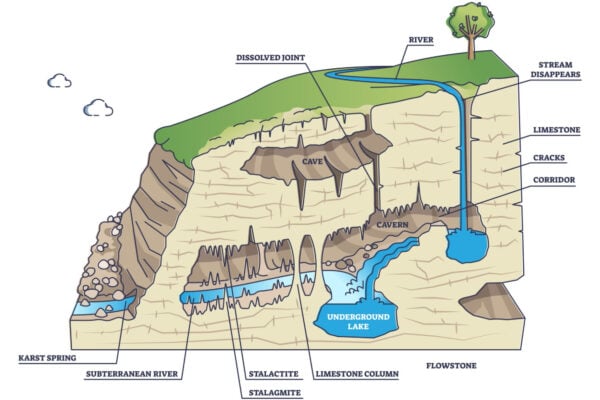
Understanding Karst: Swiss cheese beneath our feet: Diagram of a karst landscape, illustrating the underground caves, sinkholes, and fractures carved into limestone bedrock over millions of years. Illustration by VectorMine / Shutterstock.com
Karst. It’s a funny sounding word with significant meaning for those of us living in the Shenandoah Valley. Thus, it behooves us all to learn more about karst, including what it is, why it’s important, and what it means for our water. Read More→
Source Water in the Shenandoah Valley
Know Your Source: Where Does Your Tap Water Come From?
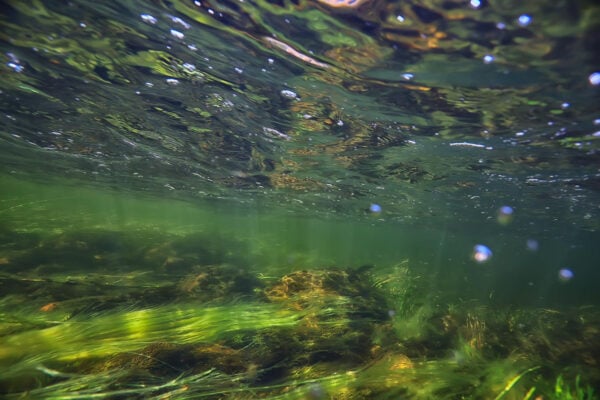
While municipal systems pull directly from familiar rivers, major springs, and publicly maintained wells, many rural residents across the Valley rely directly on private groundwater wells and springs or hauled water deliveries. Find Out Where Your Water Comes From→
On-the-Ground Conservation & Community Action
Farmers Protecting Our Water Resources
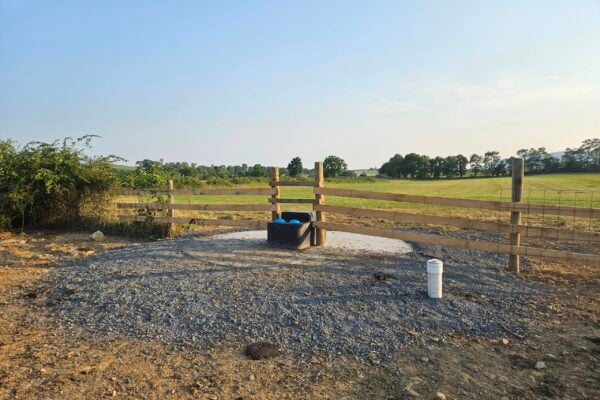
Cattle Waterer: A lactating mama cow can drink over 30 gallons of water a day in the heat of summer. Providing dedicated watering sites, like this frost-free trough, allow livestock to meet their water needs all year without wading into surface streams, rivers, and ponds where their hooves and excrement contribute harmful levels of sediment and nutrients to the water. Troughs should be placed on concrete pads and gravel aprons to limit erosion around the water source. While livestock watering systems usually draw from groundwater wells, adding another “straw” into our karst aquifers, they are critical to maintaining water quality above and below ground. Read More →
County Updates
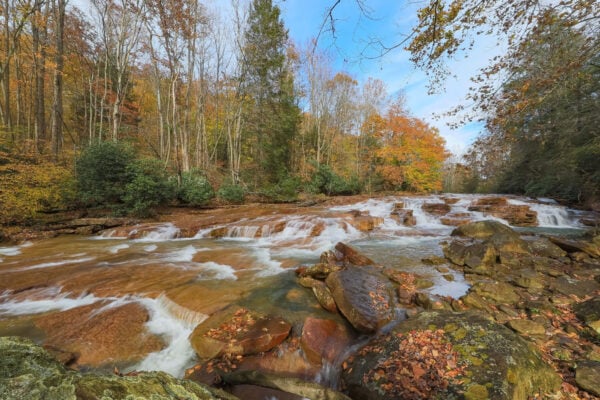
Water doesn’t stop at county lines, but local land-use choices happen locality by locality. Because geological conditions, aquifer capacity, and growth pressures vary across the Valley, each local government plays a crucial role in siting development wisely to protect groundwater and secure sustainable water supplies for the future.
At the heart of these local decisions is proactively managing our groundwater usage. It is far more sustainable and economical than trying to drill replacement wells or search for emergency water sources after local aquifers run dry. Here is a look at how source water management takes shape across our region. Read More →
Recent Updates
Big News!
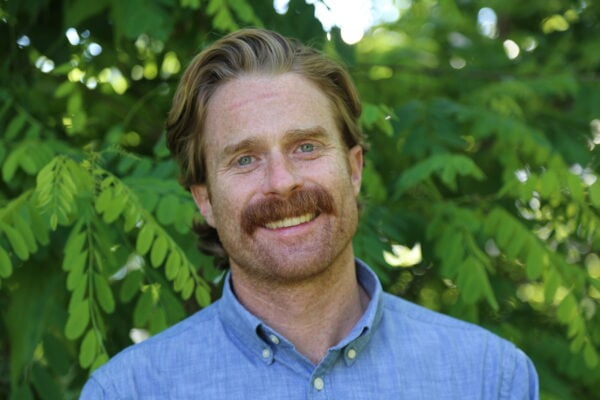
We are thrilled to share that Kevin Tate, Alliance Director of Conservation, has been appointed by the Governor to serve on the Virginia Soil and Water Conservation Board!
The Virginia Soil and Water Conservation Board guides state policy on natural resource management, nonpoint source pollution control, dam safety, and supporting Virginia’s 47 Soil and Water Conservation Districts.
Kevin’s dedication to sustainable practices on his family farm and collaborative leadership at the Alliance makes him an exceptional fit for state-level service. Read More→
Conservation Fellowship & Internship Highlight
Celebrating Our 2026 Fellow & Interns
Shenandoah Valley Conservation Fellowship Program, launched to bridge the gap between academic study and hands-on field experience, matches qualified undergraduate and graduate students from regional colleges and universities with local conservation leaders. By providing professional development and meaningful field training, the Alliance and our partners are actively building a robust natural resource conservation workforce for the Valley. Applications for 2027 are open now! shenandoahalliance.org/fellowshipprogram/
This summer, the Alliance had the pleasure of welcoming two early-career conservationists from the Appalachian Conservation Corps (ACC). From May through September, Amy Castro and Angelica Hatke stomped through fields and gullies to check on the progress of installed riparian buffers. Read More →