Farmers Protecting Our Water Resources
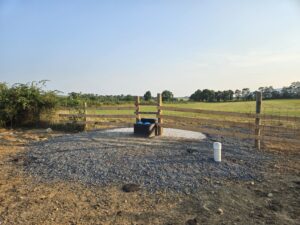
Cattle Waterer: A lactating mama cow can drink over 30 gallons of water a day in the heat of summer. Providing dedicated watering sites, like this frost-free trough, allow livestock to meet their water needs all year without wading into surface streams, rivers, and ponds where their hooves and excrement contribute harmful levels of sediment and nutrients to the water. Troughs should be placed on concrete pads and gravel aprons to limit erosion around the water source. While livestock watering systems usually draw from groundwater wells, adding another “straw” into our karst aquifers, they are critical to maintaining water quality above and below ground.
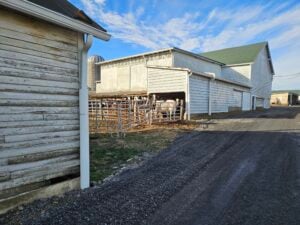
Gutters and Downspouts: Maintaining functioning gutters and downspouts directs clean rainwater away from heavy-use areas and prevents roof runoff from picking up manure, nutrients, and sediment before it hits waterways or infiltrates groundwater.
Riparian Buffer Restoration
Landowners invest in clean water and vibrant habitats by planting riparian forest buffers that will mature into streamside forests that filter nutrients, shade streams, and reinforce stream banks. From newly planted seedlings (left) to established canopy (right), forested buffers provide continuous filtration for our streams.
Cattle Exclusion for Karst Protection
Not all sensitive karst features on the landscape are wet all of the time. Intermittent ponds like this one (below left) might appear dry during a drought but are still direct portals to our underground water supply. Avoiding grazing and farming in these landscape features is good for herd health and safeguards local water supplies.
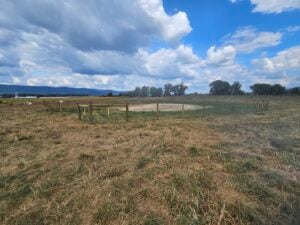
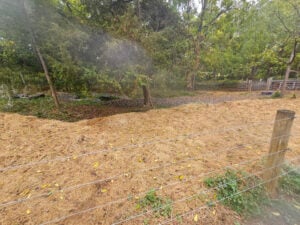
Not quite a spring, this rocky outcropping, called a seep (right), on a Rockingham County farm consistently trickles groundwater. Protecting our water means avoiding farming and development around sinkholes, seeps, disappearing streams, springs, and other sensitive karst features.
Rotational Grazing & Cropland Practices
Rotational grazing (above left) and unrolling hay in winter (above middle and right) help distribute nutrients evenly across pastures and prevent concentrated trampling, reducing the risk of erosion and runoff. (Photos by Kevin Tate)
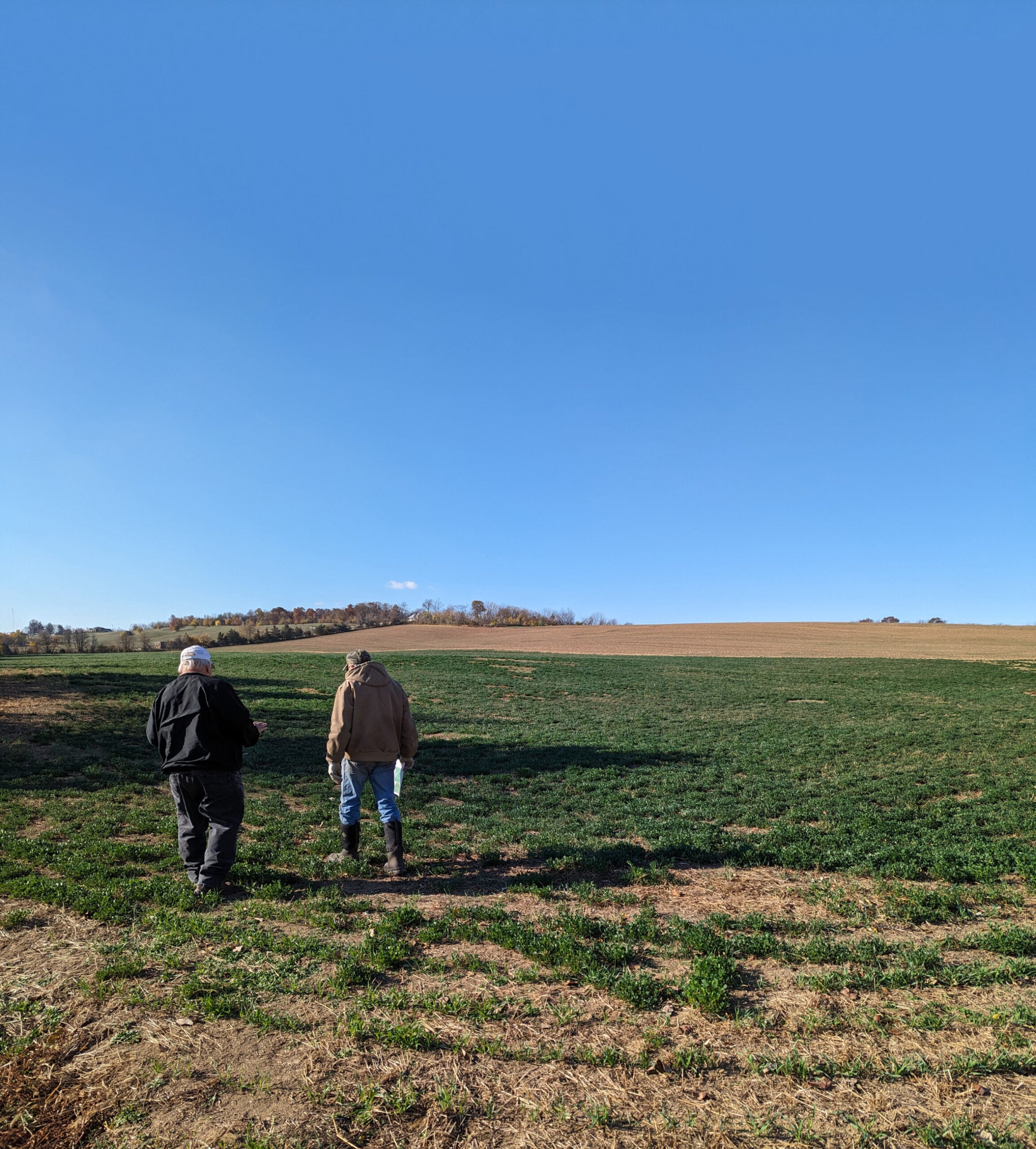
Planting cover crops and minimizing tillage and compaction protects the soil structure that allows for rainwater to infiltrate through soil and into groundwater aquifers. Good soil structure, measured by soil aggregation (how dirt clings together into healthy clumps) and pore space (the tiny air pockets between those clumps), also improves crop health and yields. Photo by Caitlin Worsham.
Beyond Farmers
Development considerations: It’s not just farmers who need to be aware of karst. Planners, county decision-makers, and developers need to be aware of how proposed developments, stormwater management, and water withdrawals for residential, commercial, and industrial uses are connected to karst and will affect groundwater. (Photo by Wil Orndorff, VA DCR)
Partnering for Clean and Abundant Water Across the Shenandoah Valley
We know that protecting our land, water, and agricultural heritage starts right here in our local communities, and we are proud to work alongside local watershed groups to safeguard the rivers and streams that feed the Shenandoah, James and Potomac watersheds.
Our Watershed Partners
Connect with local organizations working to protect your local waterways! Check their community events calendars online for upcoming volunteer workdays, water sampling trips, and pasture walks across the Valley!
Friends of the North Fork of the Shenandoah River (fnfsr.org)
Friends of the Shenandoah River (fosr.org)
Friends of the Middle River (friendsofthemiddleriver.org)
North River Friends (website coming soon!)
South River Watershed Coalition (southriverwatershed.org)