SHENANDOAH
Safeguarding River Flows & Underground Reserves
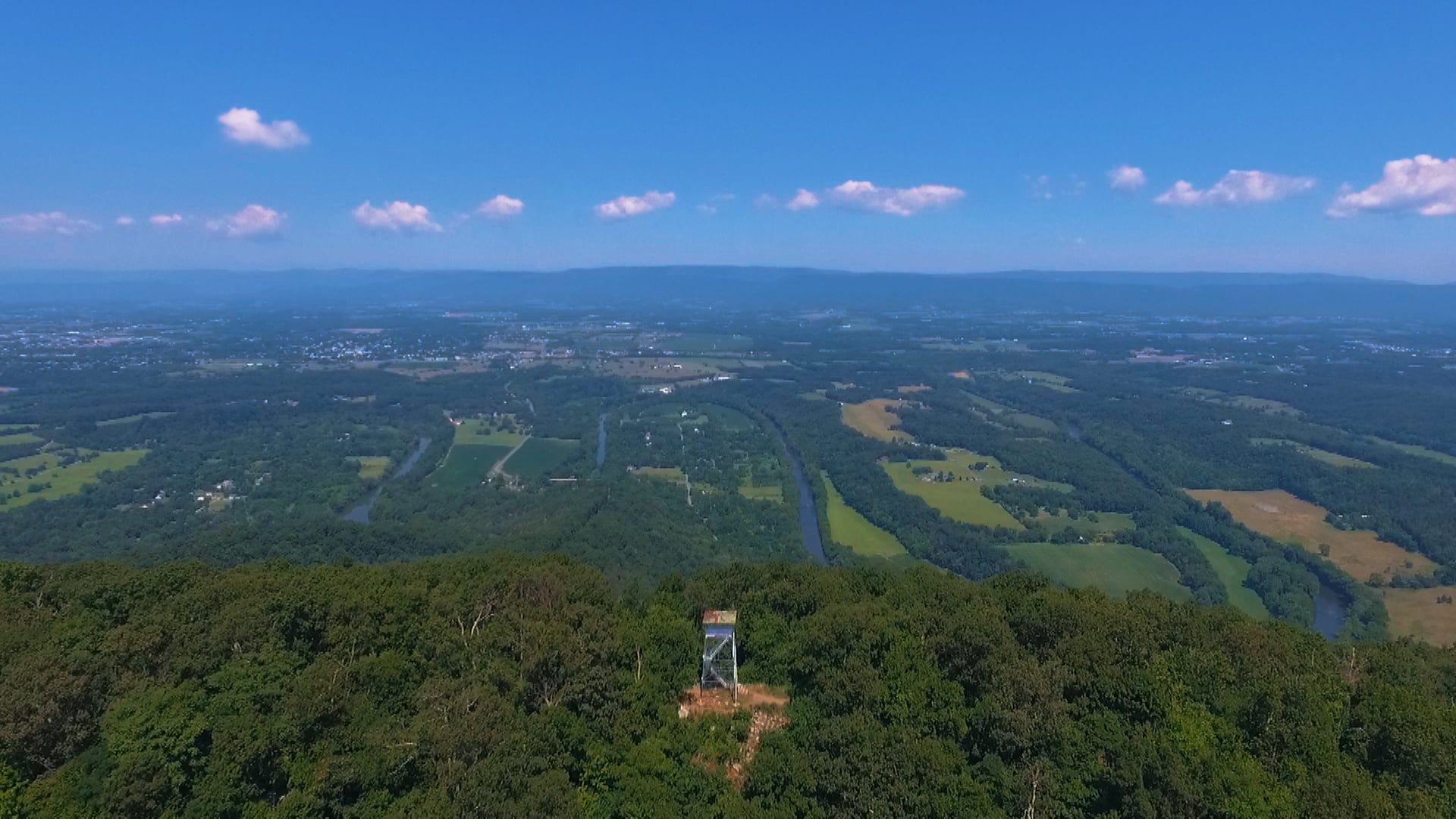
The North Fork of the Shenandoah River winds through the heart of Shenandoah County, serving as the main source of water for towns like Woodstock and Strasburg. Beyond municipal borders, most rural households and agricultural operations rely on private wells and springs that tap into the underlying karst aquifers.
The North Fork also relies on groundwater baseflows—the steady discharge from underground aquifers that sustains rivers between rainstorms—to maintain its stream levels. Because the county rests on porous limestone bedrock, surface waters and underground aquifers function as a single interconnected system: what happens on the surface directly impacts the quantity and availability of water stored beneath our feet.
Protecting these vulnerable underground reserves relies heavily on long-term land preservation alongside intentional working-lands management. Shenandoah County stands out in the region by maintaining a dedicated, funded Conservation Easement Authority (CEA). Permanently protecting prime farmland, forests, and sensitive river corridors from development with conservation easements keeps rural acreage unpaved and permeable. This ensures that rainwater can be absorbed naturally into underlying sinkholes and fractured limestone bedrock, refilling the underground aquifers, rather than rushing off as swift, polluted storm runoff into the North Fork and the streams that feed into it.
Conservation at the Local Level
In 2008, the Shenandoah County Board of Supervisors established the Conservation Easement Authority (CEA) to give landowners a voluntary way to permanently protect family farms, forest land, open space, and natural resources from high-density development. Supporting the county’s rural character and comprehensive plan, the board launched a local Purchase of Development Rights (PDR) program in 2011, making Shenandoah one of the first counties in the Valley to fund land conservation. Shenandoah County was then selected as one of only 13 Virginia localities to receive a matching grant from the Virginia Office of Farmland Preservation. From the start, Shenandoah Forum (now part of the Alliance) worked alongside local landowners to build support for the program and help county leaders get it off the ground.
On working farms, targeted management practices work hand-in-hand with land preservation to safeguard water supply. Restricting livestock from sensitive areas prevents waste and erosion in waterways. Soil conservation, cover crops, and vegetative buffers filter runoff and replenish groundwater, while precise nutrient planning prevents leaching. These methods sustain both agriculture and water quality.
Protecting Shenandoah County’s water supply relies on balanced land-use planning, permanent easements through the Conservation Easement Authority, and the widespread adoption of agricultural best management practices across the watershed.