
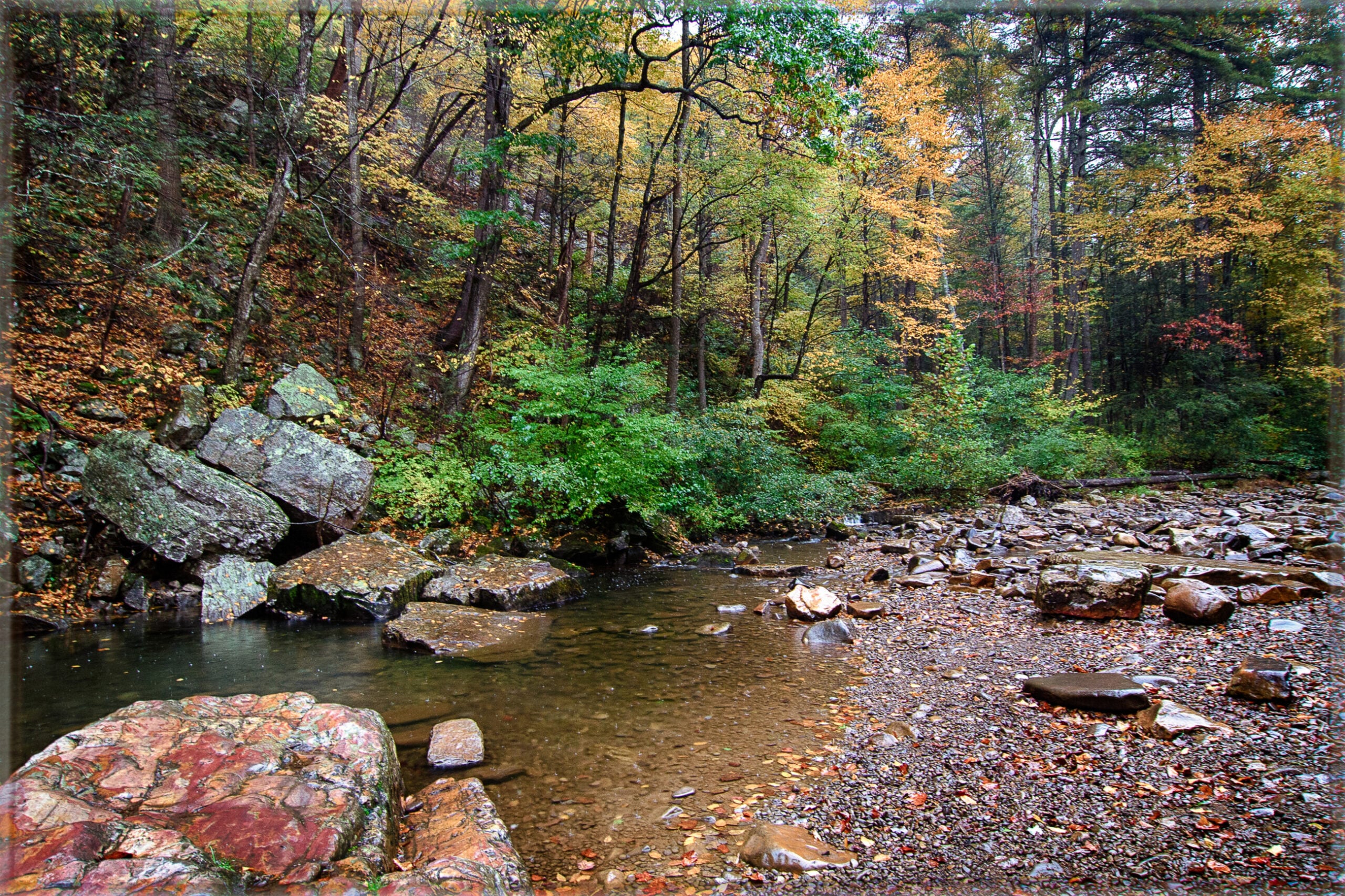
The federal government has issued a proposal to rescind the 2001 Roadless Area Conservation Rule, posing a threat to the clean water and tourism economy that the George Washington National Forest (GWNF) provides to the Shenandoah Valley.
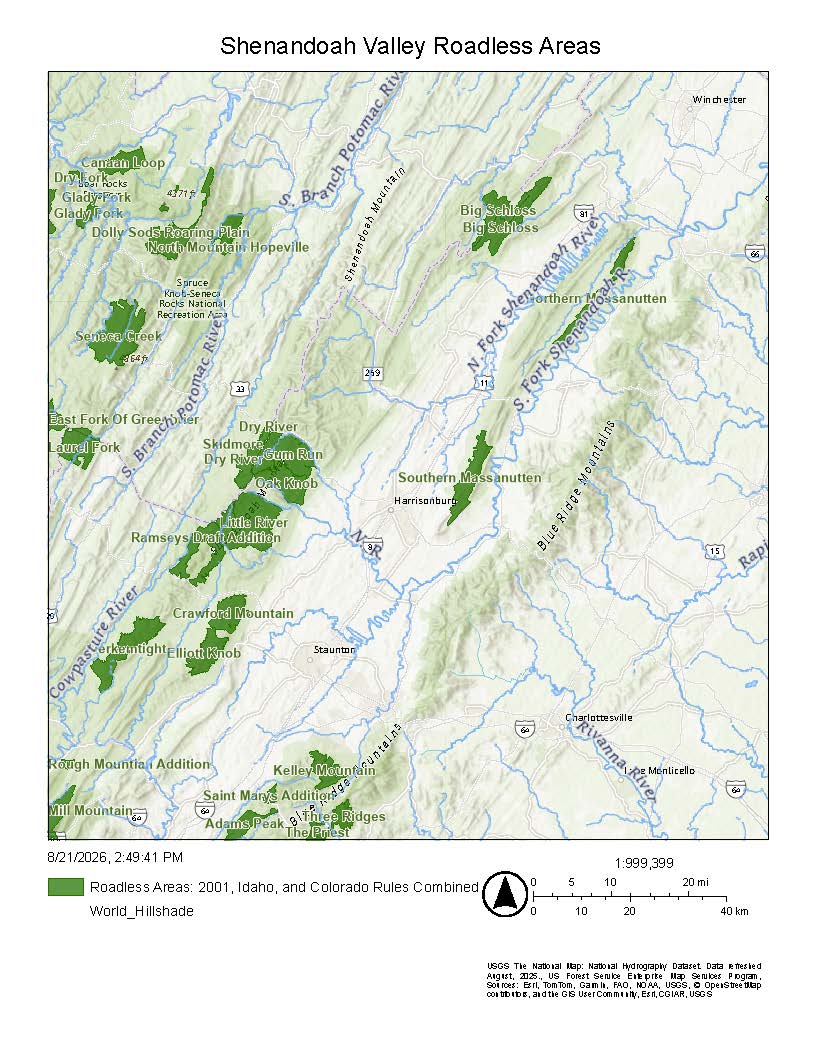
(Click here for an interactive map showing roadless areas nationwide created by Trout Unlimited)
What the Roadless Area Conservation Rule IS
For 25 years, this rule has protected the least-developed areas of our national forests by prohibiting roadbuilding, development, and commercial timber harvesting while leaving the majority of our national forests available for other uses, including timber harvest. (See the map).
What the Roadless Area Conservation Rule IS NOT
Importantly, the Roadless Area Conservation Rule is not the “hands-off” preservation policy that opponents claim—it explicitly allows continued strategies for firefighting, timber cutting to improve forest health and wildlife habitat, recreational access, and the exercise of valid existing mineral and private property rights.
What is at stake.
- Drinking Water Protection: The GWNF’s roadless areas act as a natural water filtration system for municipal and agricultural water supplies up and down the Valley. Rescinding the rule risks introducing ground-disturbing activities that cause erosion and sedimentation, severely threatening our municipal water quality and quantity.
- Economic Impact of Tourism: Our local economy relies heavily on outdoor recreation and tourism anchored by these wild spaces. From world-class hiking to backcountry hunting, fishing, and birdwatching, these areas support a multitude of local hospitality and outdoor businesses.
- Fiscal and Safety Risks: Adding costly new roads to an already massive maintenance backlog only wastes resources and leads to neglected, failing infrastructure. Poorly maintained roads and culverts are unsafe and degrade water quality.
What you can do.
Please submit an official comment by September 21, 2026 to protect our local drinking water and the wild spaces that support habitat and outdoor recreation.
Tip: When submitting your comment, personalize your message by sharing why clean water, outdoor recreation, or local public lands matter to you and your community!
Top photo by Striebig Photography & Design.