
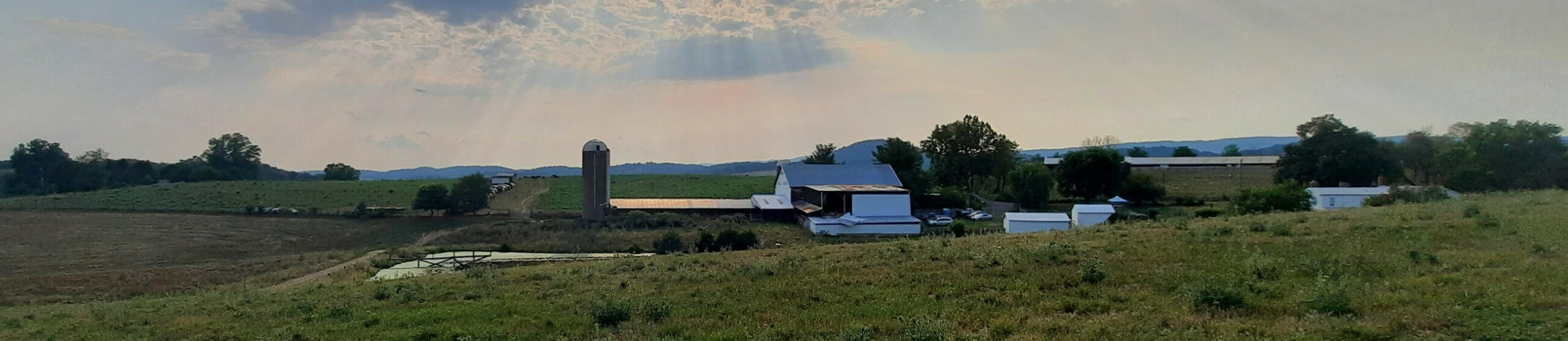
Land conservation means making plans for your land so that existing natural and cultural resources are protected for future generations. Important land conservation tools are permanent conservation easements and temporary agricultural and forestal districts.
Land Conservation
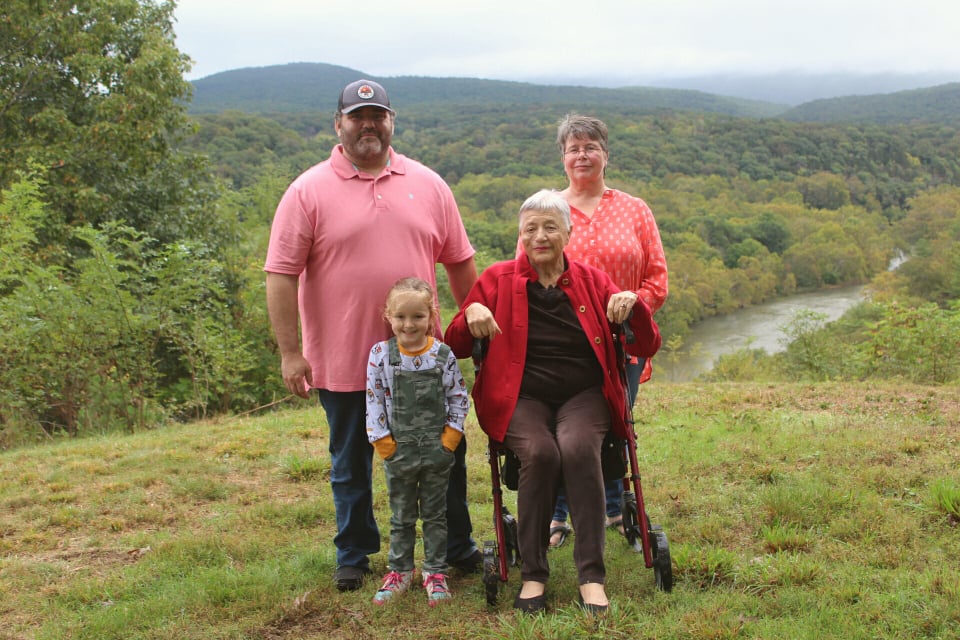
Robert Hupman and his daughter Shenandoah with Anne Guy and Anne’s daughter, Jackie Leggett (left to right). Read their family’s land conservation story in Catching the Land Protection Bug. (Photo by Explore the Valley Photography)
Conservation Easements
A conservation easement is a voluntary agreement established between a landowner and non-profit conservation organization, called a land trust, or public entity. The landowner decides what uses to allow or restrict on their property and the organization or entity agrees to enforce those decisions perpetually.
The land trust or entity who agrees to enforce the easement is known as the easement holder. The terms of the easement, what is allowed and restricted, are legally enforceable and stay with the land, even when ownership changes.
There are governmental and non-profit programs to help protect land with specific resources, such as prime soils and forests, historic sites, and natural heritage. Easements established through these programs have special protections tailored to the unique resources on the property.
Agriculture and Forestal Districts
Agricultural and Forestal Districts are temporary agreements between landowners and a county to keep their property undeveloped and available for farming or forestry for a certain period of time, usually 4 to 10 years. Participation in these districts is voluntary and intended to help counties protect farm and forested land as a major economic and environmental resource.
Why land conservation?
The Shenandoah Valley Fund
Public Agencies
Conservation Landowner Profiles


Current Land Conservation Projects
Recent News
The Next Generation of Conservation
May 08 2026
Land conservation means making plans for your land so that existing natural and cultural resources are protected for future generations. […]
Shenandoah Valley Conservation Fellowship
May 05 2026
Land conservation means making plans for your land so that existing natural and cultural resources are protected for future generations. […]
In Page & Warren Counties, Hands-on “Speed-Dating” Workshops Advance Local Conservation Goals
Apr 14 2026
Land conservation means making plans for your land so that existing natural and cultural resources are protected for future generations. […]